Pimples are for Puberty - Dealing with Hormonal Acne in your 40s and 50s
Acne during perimenopause and menopause is a common yet often under-addressed concern among women. Hormonal fluctuations during this phase can wreak havoc on our skin, affecting our confidence and well-being.
There is no denying that the skin changes during menopause can be both uncomfortable and distressing. It doesn’t seem fair to have to battle pimples, wrinkles, acne and menopause symptoms at the same time, but please know that you are not alone.
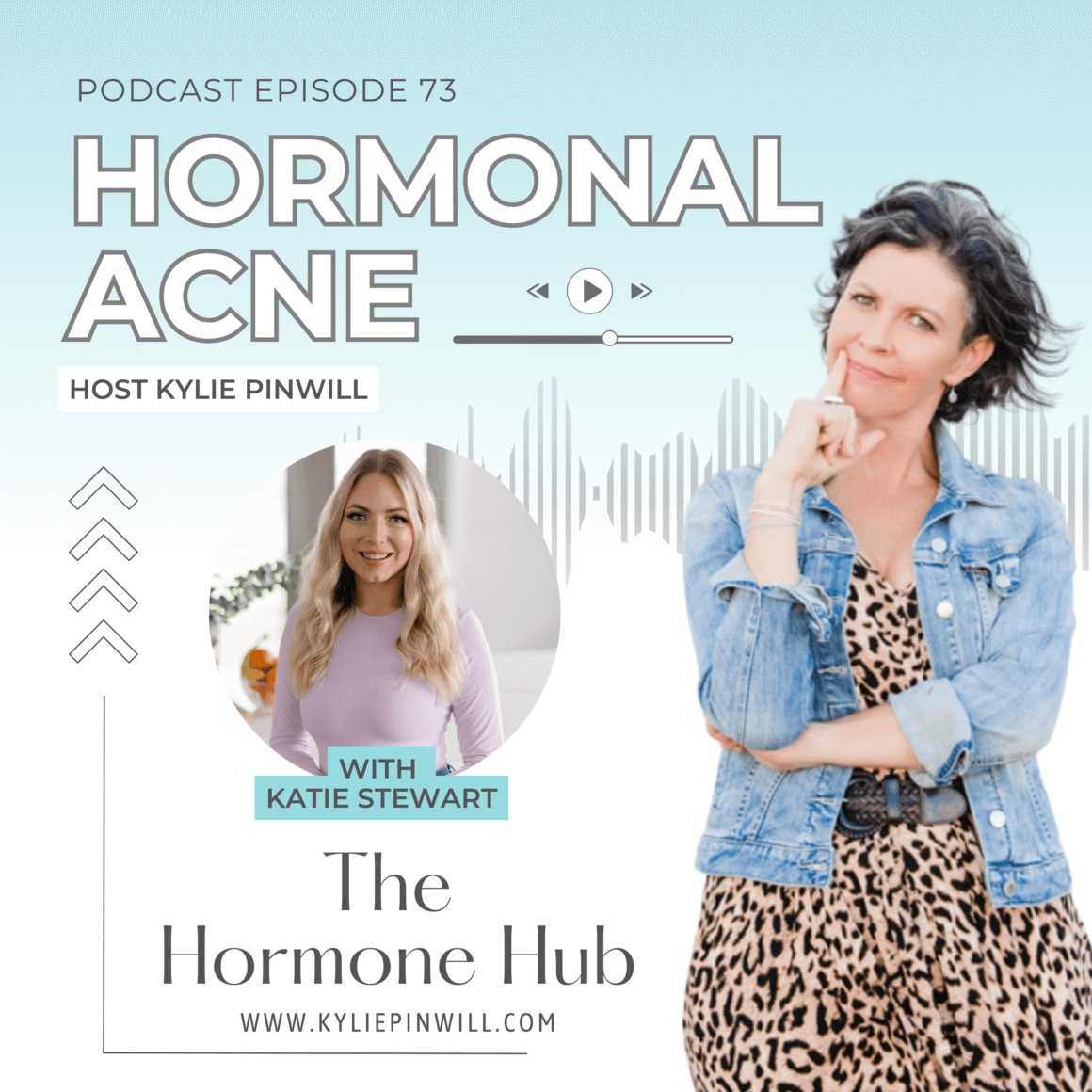
In this episode we sit down with the incredible Katie Stewart, a highly experienced acne nutritionist. Katie uncovers the mysteries behind why women in perimenopause and menopause experience acne and provides valuable insights on how to treat and manage it effectively.
Katie brings her years of expertise to the table, shedding light on the underlying drivers of acne (it’s not what you’re thinking!) and offers practical solutions to regain radiant, blemish-free skin.
Here are some highlights you can look forward to:
Understand the intricate link between hormones and acne during perimenopause and menopause
Identify common triggers that can exacerbate acne
Gain valuable nutrition and lifestyle tips to maintain hormonal balance and improve skin health
How functional testing can get to the root cause of what’s triggering acne
Explore evidence-based herbal and nutritional supplements that can aid in reducing acne.
This episode is a must-listen for any woman experiencing skin concerns.
I’d love for you to share this conversation with friends, family, or anyone who might benefit from understanding more about hormonal acne.
Links and Resources
You can find out more about Katie over on her website and Instagram. And check out her Gut Loving Cheat Sheet.
And make sure to tune in on our latest episode and hit up Apple Podcasts, Spotify, Amazon, Google or wherever you listen to your Podcasts to join the fun!
The Hormone Code
Tailored program for high achieving women to regain your energy and focus, conquer mood swings, lose unwanted weight and rebuild your confidence, knowing how to work with your changing hormones.
All without sacrificing your quality of life.
Let’s rewrite the narrative on perimenopause and menopause and do it differently.
This is an incredible time to course-correct your life so let’s start with resetting your menopause symptoms.
The Hormone Reset
Who says you have to feel tired all the time? Let’s change that!
The Hormone Reset is designed to reboot your system so you have more energy, feel less bloated, sleep better and kick those pesky cravings.
The Hormone Reset has no calorie counting, no expensive meal replacements and no crazy “detox in a box” that leaves you on the loo!
Simply fresh whole foods designed to support what your body does naturally.
Transcript
Kylie: Hello, hello and welcome back to The Hormone Hub. In this episode today, I am very excited to have a long-term friend, as a guest on the podcast. [00:01:00] We have Katie Stewart today, and Katie’s a registered holistic nutritionist, and she’s the founder of the Clear Skin Solution. So Katie helps, Adult women who are struggling with chronic acne to get to the root causes of what’s triggering all these breakouts.
She also does a lot of functional testing with a lot of her clients, which really sets her apart from, let’s just slap another product on your skin. For sure. So Katie’s goal is for women of any age to feel confident and beautiful in their own skin again. So, welcome Katie. I’m so excited to have you on the show.
Katie: Thanks Kylie. I was so pumped when you’re like, do you wanna be on my podcast? I’m like, absolutely I wanna be on the podcast. It’s actually one of my favorite things to do. We just started our own podcast back in June and it’s been the highlight of my week every week. And anytime I get to guest on another podcast is amazing.
And it’s even better when it’s a friends.
Kylie: Yeah, absolutely. And it’s fun. It’s fun doing it with the friends.
Katie: It’s so fun. It’s like having a tea with your girlfriend.
Kylie: Yes, absolutely. So [00:02:00] everyone listening, you’re just along for the ride as Katie and I have a a catch up.
Katie: Buckle up. Buckle up everybody.
Kylie: Katie, i’ve had a lot of women reach out to me sort of over the years, and they’re like, okay, I’m 50, I’m 40, I’m 45, I’m 55. You know, why are, I’m getting hot flushes. I’m putting on weight. I’ve got all this stuff going on. Why am I still getting pimples and acne?
Katie: It’s crazy right is, it’s always, acne itself is always looked at as being a teenage disease. It’s like, oh, everybody always expects the pimply teenage kids as they’re going through puberty. But no one ever expects adult women and like, okay, maybe in your twenties you can kind of sort of get away with it ’cause you’re entering adulthood. But in your thirties and your forties and your fifties and even your sixties, it starts to stand out a little bit.
And for our clients, It, they, they feel very isolated and very alone ’cause it’s not a very common thing to, to me it’s common ’cause it’s what I do day in and day out. Yeah, yeah. But for them, they don’t often [00:03:00] know another 40 something, 50 something dealing with adult chronic acne. It’s like, mm-hmm. Okay.
So I have to deal with fine lines and acne, what a cruel sick joke from the universe. Like what is that gonna regulate itself? So absolutely. If you are listening, you have been dealing with the dreaded adult acne, forties, fifties plus, you are not alone.
Kylie: Yeah. Yeah. And how, like what role does perimenopause and menopause play in acne?
Because for some women that I speak to, you know, they might have had acne as a teenager in their twenties. It’s sort of died down for a few years and now it’s reared its ugly head again.
Katie: Absolutely. And there’s a number of things we really have to look at, right? Because as you know Kylie, and I’m sure your clients know in your community that there isn’t a one size fits all approach to everything.
It’s not like, oh, you know everyone, as soon as you get menopause, you get a hot flash, and then you get breakouts. So for our clients,
Kylie: So stop buying all the supplements on Facebook. Ladies, it’s not a one size.
Katie: If, if we could maybe summarize this episode, it’s probably do not buy that hormone balancing supplement the influencer [00:04:00] on Instagram is repping because they’re getting paid to do so.
Kylie: Ah yes, a hundred percent. 110%. Just saying that ladies. It’s Katie too.
Katie: I am on my soapbox, Kylie, all of the time preaching. Please don’t blind supplement. ’cause you could be making the issues way worse in the long run.
But when we’re looking at those perimenopausal, menopausal years, We really do find a compounding effect and that shift in your hormones. So we have to remember that everything that’s happened to us from the time of conception up until today has been an impact on our overall health status. So when we’re looking at that big overarching health picture, when we’re in our forties and fifties, like there’s a few decades under our belt at that point.
And when we look back over that timeline, maybe as a kid you got, sick a lot, you had antibiotics, maybe you got parasites, food poisoning, you had painful periods. Maybe you took the pill or took, Accutane in, in our instance, a lot of Accutane users, Maybe you went through the job stress [00:05:00] university, you ate really crappy.
You had all of the refined , foods, the sugars, the alcohol, all of the fun basically
in your twenties. I lived on vodka rock stars or vodka orange juices and cracker dinner for like a solid five years. So been there, done that.
Kylie: Yeah. Weetbix and 2 minute noodles were my menu of choice.
Katie: The instant ramen noodles, like obviously you get to save the most amount of time and money.
Kylie: True. Cheap. Cheap because it was more money for beer, right?
Katie: Yeah. Obviously, like I’d rather be spending my money on alcohol versus actual food.
Kylie: How did anyone of us actually live through our twenties is the whole thing.
Katie: Honestly,
I’m not quite sure. Like my, I look back on it and I cringe. I’m like, oh my dear God, yes, I had fun, but now,
Kylie: So I can add another layer in. So now, of a mum of a recently turned 19 year old, he’s traveling for the first time through Europe and Katie, your kids are younger, so you’ve got all this to look forward to.
He sends me a photo, he’s in Thailand for his 19th birthday. He sends me a photo of him [00:06:00] dressed as a lady boy, and okay then a video of him on stage dancing. You know the lady Ladyboy dances and guess who wins the ladyboy competition.
Katie: Your son obviously.
Kylie: Yeah, so there, you know, proud parenting moments, but like part of me is, oh my God, like I would’ve totally been in that,
Katie: Same, I would’ve been like, sign me up, like, where’s the grass skirt?
Is what I would’ve been doing.
Kylie: Head to toe sequins and head to toe.
Katie: You’re a poor guy. Your liver don’t do it.
I learned from my lessons
Kylie: coincidentally, you know, it’s, we kind of get it under control and then it flares up. But he does suffer also from acne.
So it’s like, oh mate, what are you gonna come back like?
Katie: But it, it’s hard, right, is when you’re in that age, it’s really hard to see past the fun. But as we get into those thirties and those forties and those fifties, That’s where we look back on all of those years we had, we’re having too much fun and we’re now seeing the impact.
It’s that compounding effect. So when we get into our thirties, maybe you’ve had kids, maybe you’ve had [00:07:00] pregnancy losses, maybe you’ve done I V F, maybe even on the birth control pill. Anything in that realm of fertility for women can have a really big impact on your hormones, which I’m sure you see as an impact for your, for your perimenopausal, menopausal clients.
Kylie: Yeah, massively. And I think, you know, the. The easier run you’ve had throughout your life with your periods. Like if you are, if you have a healthy period, so your period just arrives, and then you bleed for 4, 5, 6, 7 days and then it goes. So, like that’s a healthy period. It shouldn’t be painful.
It shouldn’t be heavy. It shouldn’t be anything. The women who’ve had those sort of periods tend to have the smoothest run through menopause, but the women who’ve suffered, like with endometriosis, some polycystic ovaries and you know, like heavy, painful bleeding, cramping, all of those things, these poor women have just been up against their hormones their whole life and their ride through menopause tends to be, they feel perimenopause a whole lot sooner than, than the other women for sure.[00:08:00]
Katie: It’s like going offroading and A T V off the side of a cliff.
Put your helmet on, put your seatbelts on your five point harness and buckle up because it’s gonna be a fun ride.
Kylie: Yeah, yeah. But you know, so let’s not to say that there’s not a lot we can do, not to say absolutely
Katie: It’s never too late to really take control of your health.
So when we see our clients. Because again, we have the bulk of our clients are their, in their 30 plus. Of course, we get the 20 somethings, but I find the 20 somethings just aren’t as committed to their journey at that point. That’s not to say all of them aren’t, but they’re still in that partying. Student life, university life.
And really is the thirties and up is where we see the bulk of our clients. And we have a lot, I would say at least 20% of our clients are 40 plus. 50 plus. We even have a couple of clients in their sixties. Yeah. And what we really see is that big core root of what’s going on with their acne is of course there’s gonna be gut inflammation, which we know gut inflammation is having a massive impact on the health of your hormones.
’cause your gut is responsible for manufacturing, regulating and metabolizing. So [00:09:00] many of your hormones. Yeah, so it’s struggling. So are your hormones. I’m sure you do lots of gut work with your own clients.
Kylie: Oh, yeah. Yeah, because that’s the thing, if you’re not, you could have the world’s most perfect diet, but if you are not absorbing the nutrients from the food that you’re eating, we’re missing the mark.
You could be popping a hundred supplements a day, but if you, again, if you’re not absorbing what you are taking into your body, we are definitely missing the mark. And I see like with a lot of our clients too, as we sort of get older, our body’s producing less stomach acid, we’re producing less digestive enzymes, so we are not able to, it becomes harder again for us to break down those nutrients and, and absorb them into our body so, it can go off and do all the jobs that it, that they need to do.
Katie: Now, I’m so glad you brought the stomach acid up because I was like, oh my gosh, we have to go there. ’cause as you age it declines and it’s a really big impact overall on our gut health, but also the health of our skin. So when we look at the impact of stomach acid on acne sufferers, there’s a couple ways that it [00:10:00] impacts.
So the first one, of course, like you already mentioned, Kylie, is the lack of nutrient absorption because when you, your stomach acid is meant to help break down and break down your food. What happens in when there’s not enough of it is a few things is one, you’re not absorbing all of those wonderful nutrients.
So you can be eating the best diet in the world, but if you’re not absorbing it too bad, number two is it can actually cause your food to putrify and ferment and sit in the gut too long, which is going to be a little smorgasbord, a little all, all-you-can-eat buffet for the bad bacteria and yeast in your gut.
So you’re allowing that gut inflammation to proliferate. And to grow and to get worse. And it’s all leading back to our stomach acid. And another thing we find, especially with acne sufferers, and I’m sure you see this in your own clients, is constipation. Like constipation is huge for acne sufferers because remember, your colon is part of your body’s detoxification system.
Yeah. And if you’re not having a healthy bowel movement, one to [00:11:00] three times a day, not per week, not per month, not per a year, one to three.
Kylie: Hopefully they’ve got this message, but let’s say it again. How many bowel movements should we be having, Katie?
Katie: One to three every single day. And it’s not just bowel movement.
You wanna be having a healthy bowel movement. So we need to be looking at, well, what does that healthy bowel movement looks like? It should be, you know, one long, smooth snake-like movement, minimal cracking. You should be not straining, you’re not spending 25 minutes on the toilet. It should be quick, easy to pass with minimal residue.
That’s a healthy bowel movement. And you should feel like a complete emptying. It’s not like there’s something stuck in there. It’s not super loose. It’s not rabbit pellets. Yeah. That’s what we wanna be looking out for. ’cause if you’re not having those, We’re chronically constipated. We have to remember that all of the waste, the excess hormones like your estrogen, your toxins that your body’s trying to get rid of through your stool are now reabsorbing back into your bloodstream, circulating throughout your body, and that relating to a higher [00:12:00] level of systemic inflammation, a higher burden on your liver and leading to an excess in hormones.
And whether you’re dealing with acne, you’re dealing with menopause, having a healthy bowel movement is gonna be critical.
Kylie: A hundred percent. That’s the thing, and I say this all the time, it doesn’t matter what your health goal is and what your symptoms are that you’re struggling with
If that digestive system and that bowel movement, if that’s not working, Everything is gonna be, backed up. Literally. Yep. So ladies, we cannot stress enough the importance of, getting on top of your digestion. So Katie, I know you do a lot of functional testing with your clients.
Do you wanna talk us through the types of testing you do?
Katie: Absolutely. So with our clients, and just in my practice in general, we’re all about testing and not guessing when it comes to acne. Because acne sufferers have spent a little bit of time and money on their face. Like myself alone, I spent $10,000 on my skin over the course of a five year period.
It’s a shocking number to hear, but when you think about it, that’s $2,000 a year, or we’re at $180 a month. How easy is it to spend 180 bucks on your face, whether. It’s a facial. That’s $200. You buy a new skincare product.
Kylie: Yeah, it’s just that facial alone, let [00:14:00] alone all, yeah. The other bits that come with it.
Katie: So, and I think 10 grand is conservative, to be honest. Like I’m sure it was more on the $15,000 range. So women are, they’ve spent a lot of money and they’ve spent a lot of time on their face. So I don’t wanna be trial and erroring with supplements and saying, oh, you wanna know what, like let’s just throw this probiotic and this liver supplement and see if it helps.
Yep. I wanna be able to have concrete answers in place because so often our clients, go to their doctor. They get those traditional blood labs done and they’re told everything’s normal. You’re completely fine. Meanwhile, we have a face full of cystic acne. We have hot flashes. If there are older clients, we have chronic migraines.
We have, bloat and horrible stomach issues. We’re not going to the bathroom every day. We have joint pain, we have brain fog. We’re not sleeping. But Kylie, everything’s normal. Your blood labs are totally fine, so there’s nothing wrong, just a part of getting older. It’s a part of getting older, and that’s what we hear is it’s a part of getting older.
[00:15:00] It’s a part of being a woman. It’s a part of being a mom. And it’s like, no, it’s not just a part of. Your body is meant and designed to thrive, not just survive. Yeah. Yeah. And in our society, we made it so commonplace that just because something is common doesn’t make it normal. Just because menopause sucks for the majority of people, women in our society, doesn’t mean as it has to.
Kylie: Absolutely. You know, and I think we’re, we’re too easily dismissed. And what I also see, which , is, is really interesting. So women who are suffering, they just put up with, all of these symptoms. But they don’t actually know that they, there are options to do something about that and change it.
You can choose to change it at any time. And, I’ve had some great conversations recently with, with clients before they’re, or while they’re thinking about, making a change or enrolling in a program or, doing something about their health is, we also get to choose.
And if it’s available to us, we [00:16:00] can choose to do things differently. And, we don’t have to put up with all of these things. We don’t have to suffer through, by any means.
Katie: When we’re looking at making a change, and it can be kind of scary for a few reasons, of course there’s a financial commitment, of course there’s gonna be some changes made and it really, for our clients in general can be that fear of failure also.
That fear of the unknown. Yeah. And when clients are have, or just women in general, having these self-limiting beliefs pop up. I really like to encourage, okay, let’s make. A list of what is your acne, what is your menopause symptoms costing you, not just financially, what’s it costing you mentally and emotionally as well?
Because there’s a mental and emotional cost that goes along to dealing with symptoms day to day. And when you really look down at it, it’s like, do you want to suffer in this pain all of the time for the foreseeable future? Staying stuck on that, that hamster wheel. Running and running, running and getting nowhere.
Or do you finally wanna make yourself the top of the priority list and say, no, like, I [00:17:00] deserve to feel better. I am worthy enough to feel better, to invest in myself. ’cause again, as women, we’re such givers like we always give, give, give, give to everybody. Whether you’re a mom and you have children and.
You feel guilty for doing something for you because you’re the mom and everything must go to them. Yeah. It’s not selfish to take care of yourself like you. I I, I think the saying is so cheesy, but it’s so good, is you can’t pour from an empty cup. Yes. So when you take charge of your health, you become your own best health advocate and you’re like, no, I’m making the change.
I’m choosing differently because I want to feel better. And then when you make that change and you feel better, It trickles down into all other areas of your life, like Kylie. Do you find your clients, their relationships improve because they’re not super irritable all the time? Yeah. Or they do better at work because they have the energy from actually sleeping in the night?
Kylie: Yeah.
Oh, absolutely. Everything gets better and I think, when you, when you start to , Consciously make those changes, and work on Yeah, your sleep, your energy, focus on, how you’re nourishing your body. You then all of a sudden, have the [00:18:00] energy to, to move your body and do some exercise, which Flicks off all of your, happy endorphins and, you just, it’s good for your mental health as well as your physical health, as well as, clearer, more focused at work and yeah, calmer with your kids.
You’re not the screaming Banshee mum who’s ready to stab everybody in the eye with a fork.
Katie: So as she says, from personal experience,
Kylie: Maybe three teenage children. Yeah, our forks are kept in a drawer for a reason.
Katie: I so look
forward to the teenage years.
Kylie: Heads up. Follow me for more tips,
Katie: for more tips on therapy, Kylie.
Kylie: But, yeah
It does, you know, you improve one aspect of your life and everything else improves as well. And we’re whole people, and I think this is where, when we sort of approach our health holistically, we are looking at, our mental health, our physical health, and then break down that physical health, how we nourish our body, how we move our body, how we think, how we respond to stress
and, and work [00:19:00] on all of that. Every, it’s got that ripple effect, that benefits I think every area, which is, which is huge and I love seeing that. Absolutely. Clients too. You know, you can sort of, it’s amazing. See, see, see when those light bulbs go off and go, ah, it’s not just about losing weight or it’s not just, it’s not fixing the acne.
It’s about everything.
Katie: And I think that’s why is when people have an issue, like you have hot flashes or you have that weight, or you have acne, you have the horse blinders on, and you’re so focused on that one goal just getting there that you, you don’t realize all the other beneficial changes that can happen.
So for our clients, some of the first things we see is, oh my God, I got my period and I didn’t even know it was coming. Yeah. I’m usually in bed with a bottle of Advil and a heating pad, taking the day off work for three days. Yeah. Yeah. I I, I have horrendous bloat where I’m embarrassed to go out for dinner on dates because the bloating is so bad.
Oh my God. It’s gone. Yes. So I like to, in our, in our community, we call these non-skin wins. Yeah. Where they [00:20:00] don’t realize that changing their, their health and getting their body into a healthier state clears up not just their one goal, but all the
things.
Kylie: Yeah, absolutely. And we, we do the same because we get women who, and we’ve been conditioned by the scales.
We’ve been conditioned to measure progress by the scales, but we get our clients to keep a progress tracker. And on that progress tracker we have, yeah, their, their cycle, their mood, their bloating, their digestive system, their energy, sleep, anxiety, and then they, their skin. And then they can add to that, anything that they like.
And we get them to check in every two weeks and rate out of 10 because those sort of things you can’t measure. And, if you’ve had ongoing headaches, sort of every month for as long as you can remember, awful. Just awful. Yeah. But when those headaches get less and less, they become less frequent, they become less intense.
All of a sudden they’re gone and you don’t notice. And it’s not until you go back to the progress tracker and you kind of go, oh my God, I’m not having headaches anymore. [00:21:00] I don’t have bloating anymore. I’m not moody, I’m not anxious. And it’s, it’s really great to track that progress that way. So you can see that knock on effect to, to everything.
Katie: I think that’s a really important thing to do. We do that with our own clients and I always, we always tell them like, your acne is most likely gonna be one of the last things to clear. So in order for you to physically see that the work you’re doing is working, note your bowel movement improvements.
Note if your energy is better. Note if your periods are better. Note if your brain fog is less, and if your energy is better, if you’re sleeping better, these are all things that you can note down and be like, oh man, like it. It’s working.
Kylie: Yeah. A hundred percent. And I, I just love seeing those changes.
Katie: It’s my favorite, to be honest.
I love seeing those changes and when, you know, our clients always post a little graduation post at the end of, , their time with us and they’re always like, I expected the skin things, but I, I never expected to be able to go to the bathroom every single day. I never expected to be able to drop those last 10 pounds I was hoping to get.
Yeah. Or I, I never expected it. [00:22:00] And I really love when they get those never
expects.
Kylie: I do too. And it just makes, it’s a good illustration of how everything in your body is connected. So, like we’ve just said, you improve one thing, you improve everything. So, thank you Katie. Is there, what would you like to say, so the women who are, listening and they’re like, oh my God, I’m 50 years old, I’ve got this acne.
You know, what would you, your advice be like, where should they start? And also where can, where can they find you?
Katie: Oh, you don’t where I’m in all the places. So for you, first, I want you to remember that. You’re not alone. You know, there’s so many women in their forties and in their fifties struggling with acne.
You are definitely not the only one in the world. So I know it can feel very isolating when you’re dealing with it. And the second thing I want to remember is you’re not stuck with it forever. We just need to really examine and analyze what is the root cause of your acne in conjunction with those menopausal, shifts that you’re having.
So are we looking back at the gut inflammation? Is our liver really overloaded and. Sluggish, you know, is that [00:23:00] shift in our hormones causing us to have these additional symptoms. So this is why I am a really big, fan of that functional testing that is outside the blood lab. So whether it’s, you know, in your case probably a Dutch would be really, really helpful, or whether it’s a GI map looks at your stool or a hair trace mineral analysis, that can be really helpful.
But before you even do any of those things, just getting your digestion in a better state. But overall, I would say would be the number one, and some of my favorite tips for working on digestion, of course, chewing your food well because that helps to, improve digestion in the gut, especially if you’re dealing with low stomach acid.
You know, maybe we’re avoiding, too many liquids with our meals, which are further diluting or, digestive juices. Maybe you’re working with a practitioner to look at the right digestive support, whether that is like some digestive enzymes or bitters or probiotics, and then really loving up. On the anti-inflammatory foods and reducing those pro-inflammatory foods, I would say would be a good, really good place to start.
And if you want all of the skin loving [00:24:00] recipes, the best way to find me is over on Instagram at Katie Stewart Wellness. Or you can head over to katie stewart wellness.com for our blog where there is hundreds and hundreds and hundreds of hormone
loving recipes.
Kylie: Oh yeah. And Katie, can I thank you for I am new to the world of air fryer, like very new.
I only got one on the weekend and I cooked your salmon air fryer.
Katie: What? The honey dijon.
Kylie: Oh my god. It was amazing. So my husband was not a convert of the air fryer. What do we do? Another appliance for yada yada yada. Uh, yeah, no, he, he ate and enjoyed every morsel of your air fryer salmon, so I can highly recommend following Katie for her skin tips, but also for her acne as well.
Her recipe as well. Now, Katie has a freebie before us, the Glowing Skin Guide. So we are going to pop that for you in the show notes. We’ll also link, Katie’s Instagram and Katie’s website details in the show notes.
Katie: I gave [00:25:00] you the wrong link. That’s a, that’s an old link we don’t use anymore.
It’s called the Gut Loving Cheat Sheet.
I’ll give you a new link.
Kylie: Oh, okay. Alright. We’ll have the correct link for Katie’s freebie and we’ll just make sure it’s all in the show notes so you can go there and grab it. Well Katie, thank you. It has been so much fun. I’ve been, wanting to have you on the program for such a long time.
We are so glad we made it happen. So thank you.
Katie: Thanks kylie.
Kylie: And everyone thank you for listening and we will see you in the next episode.